
The Conversation
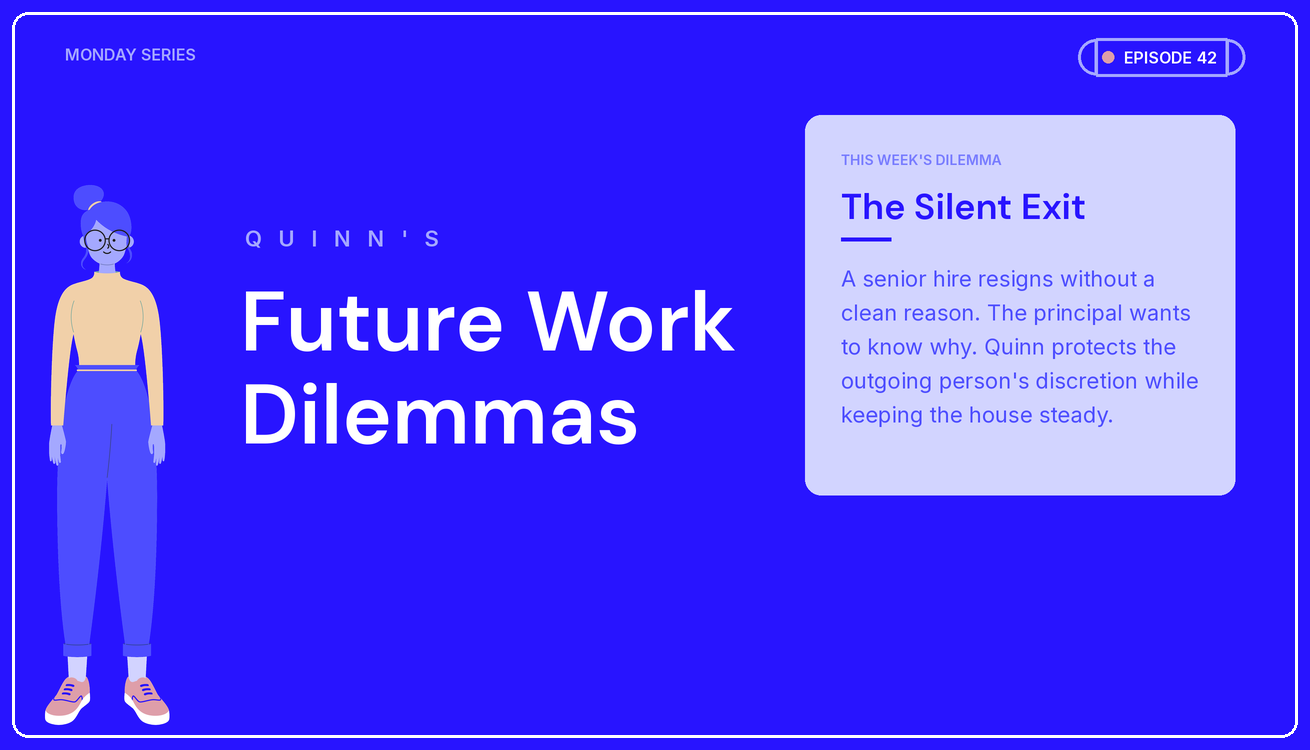
Quinn is mid-search on something unrelated when the text arrives. It is short. Polite. It confirms an effective date and nothing else.
The sender is a Chief of Staff who has been in the role for fourteen months. No performance issue. No friction anyone has flagged. The last principal review was warm. The exit is not.
The principal calls within the hour.
"I am not going to push them. But I need to know if this means something."
Quinn recognizes the question. It is the right one. A senior exit without a reason is almost never about the person leaving. It is about the shape of the seat, or the shape of the house, or a quiet signal someone else heard first.
Quinn's job is not to extract the reason. It is to read what the exit tells her about the structure, and tell the principal what is worth hearing.
What Quinn Weighs
A silent exit is information. Pressuring the outgoing person is the fastest way to destroy it.
If Quinn pushes for an explanation, she gets a rehearsed one. If she hands the conversation to HR, she gets a compliance document. Neither is useful.
If she asks the remaining team, she risks telegraphing that the exit means something, which creates the signal she is trying to read.
The right path is quieter. Quinn watches what the outgoing person does before the exit date, who they call in their last two weeks, and which files they leave clean versus which they rush. The behavior is the explanation.
Quinn's Challenge
The principal wants a read in four days. The outgoing person has three weeks left. The remaining team will interpret Quinn's response whether she explains it or not.
She has to move without cornering anyone.
The Framework Quinn Uses
Quinn calls it the Silent Exit Read. It has three parts.
1) Separate the Event from the Pattern
One exit is an event. Two in the same function inside a year is a pattern. Quinn pulls the twelve-month view before she says anything to the principal. Context changes the answer.
2) Protect the Outgoing Person's Signal
The person leaving has given the house something valuable by leaving quietly. They have declined to make a scene or extract a concession. Quinn protects that posture. It is worth more than a transcript.
3) Surface What the House Needs to Hear
The principal does not need the exit story. They need the structural read. What this exit tells them about the seat, the reporting line, the principal's own pattern, and what the next hire needs to hold.
What Quinn Does First
She does not ask the outgoing person why. She asks them what they would tell the next person in the seat. The answer is almost always the real exit interview.
The outgoing Chief of Staff answers within a day. "Make sure the second half of your Thursdays is yours. Not the principal's. Yours."
That sentence is the whole read. The seat was full. The week was full. The boundary was never drawn, and the person leaving drew it by leaving.
How Quinn Manages the Transition
Quinn writes the read as a single page. Two sections. What the exit tells them about the seat. What it tells them about the principal's operating pattern.
She does not name the outgoing person's framing. She translates it into structural language. The seat ran without a protected window for judgment. The principal's Thursday rhythm crowded out the Chief of Staff's own planning time. The pattern was not personal.
She brings the page to the principal before the end of the week.
"That is more useful than I expected. What do I change?"
Quinn names three things. A standing protected block for the role. A reporting cadence that ends before the week does, not after. A fit question for the next search that asks how the candidate protects their own time, not just the principal's.
The Outcome
The outgoing Chief of Staff leaves on good terms. They take a role at another family office four months later, and they refer a candidate back to Quinn's search two months after that. The exit was not a goodbye. It was a pause.
The replacement search moves faster because the brief is tighter. The principal runs their first month of Thursdays on the new rhythm. The seat holds.
Eighteen months later the second Chief of Staff is still in the role. The read held because Quinn treated the silent exit as a diagnostic, not an incident.
A Direct Plan for Operators
For operators facing a clean, unexplained resignation, Quinn's method preserves the signal.
Day 1: Accept the exit without extracting a reason.
Day 2: Pull the twelve-month context. Event or pattern.
Day 3: Ask the outgoing person what they would tell their successor.
Day 4: Write the structural read. One page, two sections.
Day 5: Present the read to the principal. Name three concrete adjustments.
Week 2 onward: Brief the replacement search against the revised seat, not the original one.
Operating Principles
- A silent exit is a diagnostic, not an incident.
- Pressure turns signal into rehearsed explanation.
- The behavior in the last two weeks is the real exit interview.
- The question to ask is what they would tell the next person.
Quinn's Note to Operators
When a senior hire leaves quietly, the instinct is to know why. That instinct costs more than it earns. The person leaving gave the house a gift by leaving cleanly. The job is to read the gift, not to demand the receipt.
The next hire is the proof the read was correct.
Next Episode: The Counter-Offer
How Quinn reads whether a finalist going quiet is real hesitation or negotiation posture, and holds the principal's offer without chasing.