
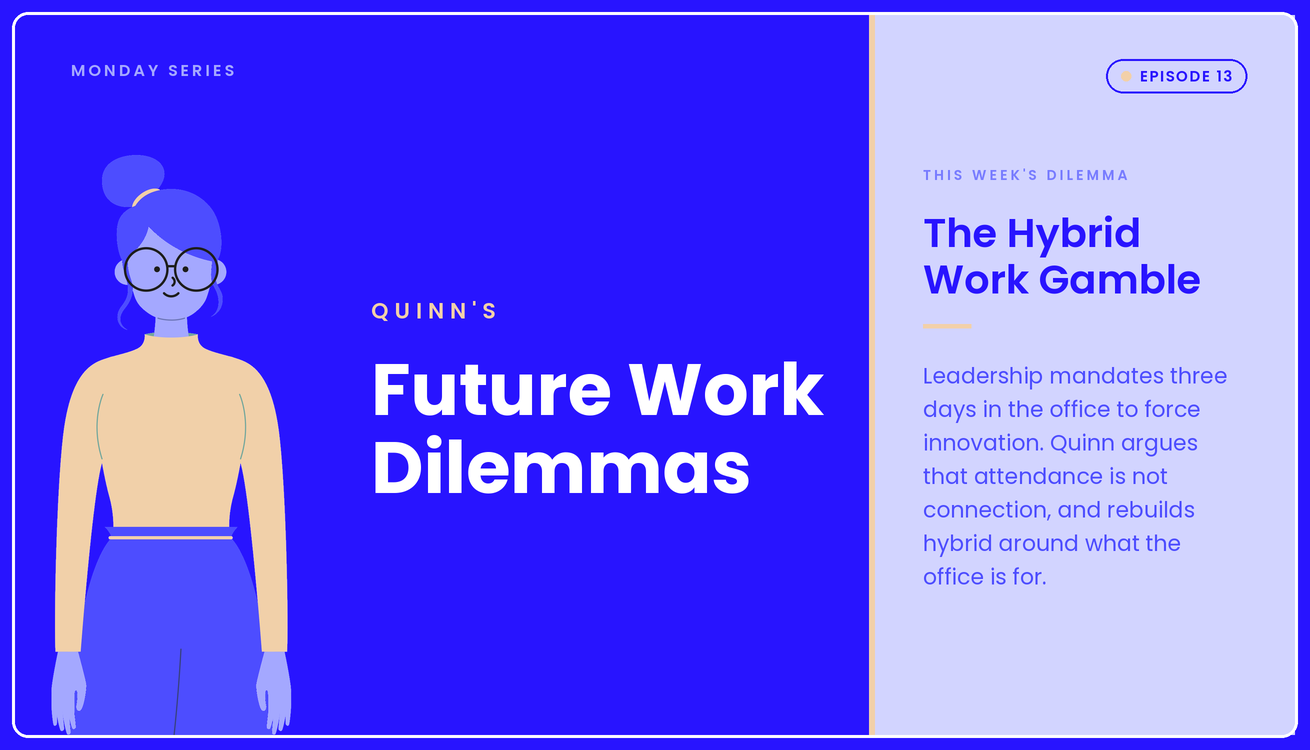

Quinn settled into a creaky chair at Byte & Brew, watching a real-time hybrid work experiment unfold around her. One corner buzzed with heated virtual meetings, another with stressed-out multitaskers juggling digital calls and real-life chaos. Quinn sipped her lukewarm americano, realizing hybrid was not the sleek perk advertised. It was an evolving strategy loaded with hidden complexities.
Back at SoulCode, Quinn's phone lit up with notifications. Leadership had just dropped a bombshell: mandatory three-day in-office policy effective next month. Her Slack exploded in a cascade of frustration and disbelief. Those quick reactions were not just about resistance to commuting. They were about autonomy, impact, and engagement.
Quinn glanced at a recent Gallup survey that showed 72% of employees favored hybrid flexibility, aligning closely with her weekly pulse checks at SoulCode. Yet leadership was gambling on mandatory attendance, convinced face-to-face interactions were essential for innovation. Quinn knew better. Innovation could not be forced by attendance alone.
She realized this was not about desks. It was about meaningfully connecting work to purpose. Hybrid was not successful simply by existing. It thrived when designed around meaningful interactions and personalized engagement.
Quinn quickly drafted her response on Slack:
"Mandatory office time won't drive innovation. What we need is intentional, purposeful connection. Let's design a hybrid strategy that empowers our teams, respects their autonomy, and amplifies their impact."
Hybrid Success Framework
- Impactful collaboration days. Plan in-office days strategically for creative brainstorming, mentorship, and alignment, not passive attendance.
- Flexible core hours. Set core collaboration hours while preserving personal flexibility, optimizing both group productivity and individual workflow.
- Autonomy-driven scheduling. Allow teams and individuals to choose schedules based on their unique productivity peaks and collaborative needs.
- Purpose-centric office design. Transform office spaces into hubs for meaningful interactions and innovation, not obligatory desk time.
Key Insights for Leaders
- Impact over attendance. Hybrid success is not about presence. It is about purposeful engagement.
- Respect autonomy. Employees deliver their best work when trusted to manage their schedules.
- Empower meaningful connection. Foster quality over quantity in face-to-face interactions.
Quinn closed her laptop, feeling more confident. Hybrid is not a gamble when it is designed thoughtfully. It is a powerful catalyst for lasting innovation.
Teaser for Episode 14: The Productivity Mirage
With the hybrid strategy set, Quinn now faces a tougher question: how do you measure productivity beyond mere hours logged?
